Book Review
So it's February again and it is Black History Month, which is good and bad. Good in the sense that we need it, but bad in the sense that it is swallowed up by all the other "month" observances we now pay homage to. For example, did you know that February is also American Heart Month, American History Month, National Bird Feeding Month, National Boost Your Self-Esteem Month, and National Canned Foods Month (to name a few)? Despite all that, February still belongs first and foremost to celebrating Black History, and there are a couple of books on our plate that I wanted to mention.
The first book is The Underground Railroad: An Interactive History Adventure by Allison Lassieur. I plan on reading this aloud with the kids at dinner over the next several days. Definitely for the older crowd (over age 6, for sure), but I love that it's interactive. You are reading from the perspective of a slave in the 1850s trying to escape, or a slave catcher hoping to get rich catching escaped slaves, or part of the Underground Railroad, helping slaves escape to freedom. While I'm not keen on the slave catcher's perspective, it does present an accurate character in the history of the Underground Railroad that you cannot gloss over. Everything in this book happened to real people, and my kids get to choose which side they're on and what to do next. We've had a lot of success reading biographies aloud together, and I hope the kids will get into the history lesson this book provides.
The next book, for me--not the kids, is How to be Black by Baratunde Thurston. I heard him interviewed recently on a radio program and he had me crying I was laughing so hard. He brilliantly writes about his experiences as a black male growing up in the Washington, D.C. area, and his interactions with everyone around him in his neighborhood, school, college, and beyond. His observations are witty yet spot-on, and if you've never understood the Oreo reference among African-Americans, you will one you've finished the book. I can't wait to get my hands on this.
Showing posts with label book review. Show all posts
2/6/12
1/13/12
Book Review
Let's see, recently I read.... (insert crickets chirping). Not a whole lot. I did get a book from the library about Lily's disease, but it was more harmful than helpful. I find that, yes, I need to stay informed, but too much information makes my head swim and causes me to lose sight of today. If I stay focused on today, I am in a much better place. And that's all I need.
I remember checking out something from the library, but I never touched it and had to return it before I ever got to read it. Please understand that I have always been the type of person that needs 146 books next to her bed in order to feel calm. I have always HAD to be reading something. But I don't have much time to read any more, and these days when I go to bed I just watch something on Netflix in my iPhone to escape. Always something funny. Always something to help me forget about everything. It's good therapy.
However, the kids are reading. Carver more voraciously than anyone. It's strange to have a child that is now old enough to be into books that I know nothing about. It used to be that we'd read together, or he would read books that I had already read (like Harry Potter or the Chronicles of Narnia or The Hunger Games). But now he gets the Middle School books of the year list and dives in. He just completed some mystery trilogy, and he is currently reading a fantasy novel about Frankenstein's apprentices. We have found audio books to be spectacular!!!! He can go through them like he goes through his socks: ridiculously fast. If you haven't gotten your kids in the habit of sitting and listening to books on tape or CD, I highly recommend it. I started Carver when he was 4 or 5, and it has been an invaluable tool in his life. He will still sit and play with Legos, and listen to a novel at the same time. And when his brother or sister get to be too much for him, he escapes into his headphones and a book.
Lily prefers non-fiction, which I am still not used to. I just don't know what to make of that. How can you not love a good novel? But she doesn't. She's her own person, and she prefers fact and science to fantasy or fiction. She is currently reading The Secret World of Wild Horses, The Encyclopedia of Horse Ownership, and Horses and Ponies: A Guide for Beginners. (Um, do you see a common theme?) Not my cup of tea but she does read them. I actually just offered to pay her to read a chapter book. She's considering it.
Zinabu is also turning into a book lover, but he doesn't like to sit alone to read. He prefers to be next to someone or reading aloud while somebody listens. Like when I'm on the phone or trying to cook dinner. The problem with that is he likes to stop every fifth line or so to tell you what's going on and give you the play-by-play to the plot. Remember, he's my verbal one. So he doesn't read as much as he could because he runs out of people who are willing to listen to him. I still read aloud to him every night, and he still loves picture books. He's currently reading The Spiderwick Chronicles.
Let it be known I'm taking book suggestions. I need something that is good enough to make me desire to stay up past my bedtime and get lost in its words. Any ideas? Hit me!
Let's see, recently I read.... (insert crickets chirping). Not a whole lot. I did get a book from the library about Lily's disease, but it was more harmful than helpful. I find that, yes, I need to stay informed, but too much information makes my head swim and causes me to lose sight of today. If I stay focused on today, I am in a much better place. And that's all I need.
I remember checking out something from the library, but I never touched it and had to return it before I ever got to read it. Please understand that I have always been the type of person that needs 146 books next to her bed in order to feel calm. I have always HAD to be reading something. But I don't have much time to read any more, and these days when I go to bed I just watch something on Netflix in my iPhone to escape. Always something funny. Always something to help me forget about everything. It's good therapy.
However, the kids are reading. Carver more voraciously than anyone. It's strange to have a child that is now old enough to be into books that I know nothing about. It used to be that we'd read together, or he would read books that I had already read (like Harry Potter or the Chronicles of Narnia or The Hunger Games). But now he gets the Middle School books of the year list and dives in. He just completed some mystery trilogy, and he is currently reading a fantasy novel about Frankenstein's apprentices. We have found audio books to be spectacular!!!! He can go through them like he goes through his socks: ridiculously fast. If you haven't gotten your kids in the habit of sitting and listening to books on tape or CD, I highly recommend it. I started Carver when he was 4 or 5, and it has been an invaluable tool in his life. He will still sit and play with Legos, and listen to a novel at the same time. And when his brother or sister get to be too much for him, he escapes into his headphones and a book.
Lily prefers non-fiction, which I am still not used to. I just don't know what to make of that. How can you not love a good novel? But she doesn't. She's her own person, and she prefers fact and science to fantasy or fiction. She is currently reading The Secret World of Wild Horses, The Encyclopedia of Horse Ownership, and Horses and Ponies: A Guide for Beginners. (Um, do you see a common theme?) Not my cup of tea but she does read them. I actually just offered to pay her to read a chapter book. She's considering it.
Zinabu is also turning into a book lover, but he doesn't like to sit alone to read. He prefers to be next to someone or reading aloud while somebody listens. Like when I'm on the phone or trying to cook dinner. The problem with that is he likes to stop every fifth line or so to tell you what's going on and give you the play-by-play to the plot. Remember, he's my verbal one. So he doesn't read as much as he could because he runs out of people who are willing to listen to him. I still read aloud to him every night, and he still loves picture books. He's currently reading The Spiderwick Chronicles.
Let it be known I'm taking book suggestions. I need something that is good enough to make me desire to stay up past my bedtime and get lost in its words. Any ideas? Hit me!
11/6/11
Remember When?
Remember when I used to update my blog almost daily? And I had high hopes of incorporating multi-cultural themes into the posts? And remember when I did book reviews?
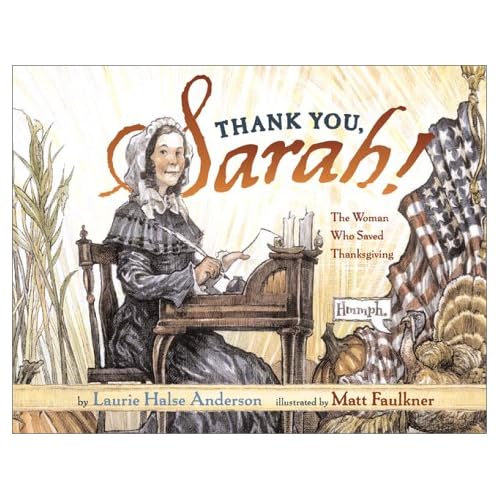
I do. I miss that. Right now I have exactly 15 minutes to myself, and I'm going to tell you about an awesome little book. Thank You, Sarah by Laurie Halse Anderson. This sweet book tells the story of Sarah Hale and her letter writing campaign to make Thanksgiving a national holiday. The best part of this book is that it really depicts Sarah as the strong, independent, fierce superwoman that she was. She did some amazing things in her lifetime--organizing a national holiday being just one of them. As the book states, "Superheroes work the hardest when things get tough." It's a feel-good story that introduces your kids to the history behind Thanksgiving, with a little "go change the world" attitude thrown in on the side. Totally awesome. I hope you can find it at your library right now.
Remember when I used to update my blog almost daily? And I had high hopes of incorporating multi-cultural themes into the posts? And remember when I did book reviews?
I do. I miss that. Right now I have exactly 15 minutes to myself, and I'm going to tell you about an awesome little book. Thank You, Sarah by Laurie Halse Anderson. This sweet book tells the story of Sarah Hale and her letter writing campaign to make Thanksgiving a national holiday. The best part of this book is that it really depicts Sarah as the strong, independent, fierce superwoman that she was. She did some amazing things in her lifetime--organizing a national holiday being just one of them. As the book states, "Superheroes work the hardest when things get tough." It's a feel-good story that introduces your kids to the history behind Thanksgiving, with a little "go change the world" attitude thrown in on the side. Totally awesome. I hope you can find it at your library right now.
8/1/11
Progress
It's the first day of August and I'm already crossing items off my to-do list. Not bad. Granted, they were the two easiest. I could just sit here at my computer and do them, but still. They're done. And how interesting to install a computer filter and then spend the last hour trying to access porn. Good to know I couldn't get anything and the filter is doing its job. I feel much better about my kids' screen time now. Honestly, I should have done this years ago. Here's the list.
There are a lot of wonderful books about Anne Frank, and of course her diary, but we started with a very simplistic overview of her life. Carver is fascinated with World War 2 (because he is 12 and he is a boy) so he knew a lot of the war details, but it was great to introduce the kids to such a remarkable young girl--who was not so different from them--and the details of what happened to her and her family. We also read a great little biography of Jesse Owens, whose story at the Olympics in Germany piggy-backed the Anne Frank story. Great books. Up next we have Benjamin Franklin and African American Inventors.
It's the first day of August and I'm already crossing items off my to-do list. Not bad. Granted, they were the two easiest. I could just sit here at my computer and do them, but still. They're done. And how interesting to install a computer filter and then spend the last hour trying to access porn. Good to know I couldn't get anything and the filter is doing its job. I feel much better about my kids' screen time now. Honestly, I should have done this years ago. Here's the list.
- Apply for Zinabu's Certificate of Citizenship. For my ramblings on this, go here. And I said no judging.
- Update our will and trust.
- Fix the broken window in our basement. Long story, but it's a double-paned window and only the inner pane is broken so it's been easy to put off.
Install some kind of filter on our computer to keep the porn away. We supervise computer use, but you never know what will creep in. Did I ever tell you about the time I was looking up a recipe and wound up at a "Girls, Girls, Girls" site? Yeah. A recipe, for Pete's sake. It grosses me out.Finish organizing our digital photos on our computer. I started but have a bit more to do.- Create memory boxes of my kids' elementary school years. I have the piles. I just need to put them in something in a year-by-year format.
- Craigslist the kid stuff we no longer need but could get some money from. Like our B.O.B jogging stroller and North Face sleeping bags.
- Go to the new IKEA that just opened. {OK, kidding.}
- Update my address book. You know, all the torn out return address labels from holiday cards that are held together by a rubber band and stuck haphazardly in my desk. I need to clean that up.
We've been reading some great biographies around here.
There are a lot of wonderful books about Anne Frank, and of course her diary, but we started with a very simplistic overview of her life. Carver is fascinated with World War 2 (because he is 12 and he is a boy) so he knew a lot of the war details, but it was great to introduce the kids to such a remarkable young girl--who was not so different from them--and the details of what happened to her and her family. We also read a great little biography of Jesse Owens, whose story at the Olympics in Germany piggy-backed the Anne Frank story. Great books. Up next we have Benjamin Franklin and African American Inventors.
5/25/11
Book Review
I'm still getting over the "Great Sombrero Debacle" of 2011 (see previous post) but I can still scrap together a couple of book reviews.
This is one of the toughest books I've ever had to read aloud. It's just so heart-wrenching. We've owned this book for a few years, and it has since won the Caldecott Medal of Honor. This is the true story of a boy who grows up in slavery, and as an adult his wife and children are sold away. With nothing left to lose, he seeks the help of the Underground Railroad and packages himself up in a crate and ships himself to freedom. I love this book for its truth, its realistic portrayal of the horror of slavery, and the consequences of families being torn apart. This is not an easy read. Zinabu does not like this book. His own words were, "That book makes me too sad." I think Zinabu is also especially sensitive to the fact that he sees Henry, the main character, through the lense of his own adoption. So if your children are adopted, try to gauge their ability to process this book, let alone even handle it altogether. Parents should preview this book before reading it aloud.
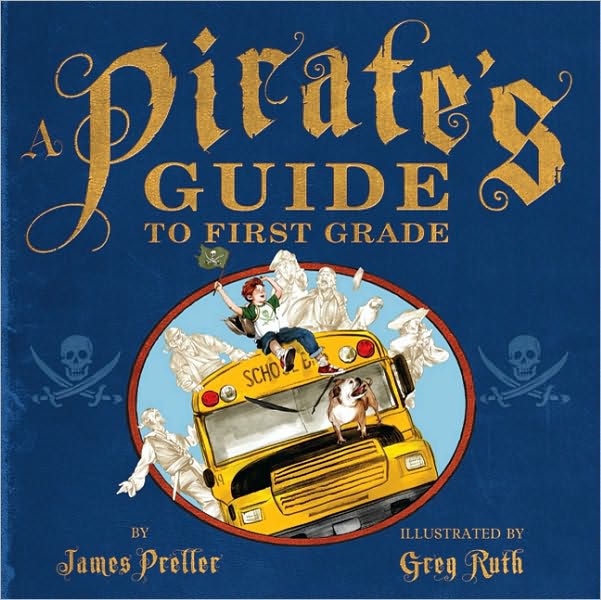
This is one of those books that I love for the illustrations alone. You will LOVE them. Clean and fresh with tributes to the 1950s. This book is about a first grade boy who goes to school with his imagination. His pirate friends accompany him all day long (my favorite is when they bust out the doors to recess). The text is written in "pirate-speak," so get your Jack Sparrow on and prepare to sound like a landlubber gone wild. A current favorite of Zinabu's.
I'm still getting over the "Great Sombrero Debacle" of 2011 (see previous post) but I can still scrap together a couple of book reviews.
This is one of the toughest books I've ever had to read aloud. It's just so heart-wrenching. We've owned this book for a few years, and it has since won the Caldecott Medal of Honor. This is the true story of a boy who grows up in slavery, and as an adult his wife and children are sold away. With nothing left to lose, he seeks the help of the Underground Railroad and packages himself up in a crate and ships himself to freedom. I love this book for its truth, its realistic portrayal of the horror of slavery, and the consequences of families being torn apart. This is not an easy read. Zinabu does not like this book. His own words were, "That book makes me too sad." I think Zinabu is also especially sensitive to the fact that he sees Henry, the main character, through the lense of his own adoption. So if your children are adopted, try to gauge their ability to process this book, let alone even handle it altogether. Parents should preview this book before reading it aloud.
This is one of those books that I love for the illustrations alone. You will LOVE them. Clean and fresh with tributes to the 1950s. This book is about a first grade boy who goes to school with his imagination. His pirate friends accompany him all day long (my favorite is when they bust out the doors to recess). The text is written in "pirate-speak," so get your Jack Sparrow on and prepare to sound like a landlubber gone wild. A current favorite of Zinabu's.
5/5/11
Book Review
At some point in the future you can thank me for telling you how to explain our nation's electoral voting system to your children. A task not for the faint-hearted. Enter the book Grace For President. It takes place in an elementary school as two students run for president. Their fellow classmates get to vote as "states" and are alloted as many votes as their corresponding states get in the electoral process. The book is seriously brilliant. Not to mention the African American FEMALE Grace who is the center of the story. Absolutely wonderful story. Five stars!
4/19/11
Book Review
Loved this book. It's a picture book biography of William Bentley, who was the first person to capture snowflakes in photographs. You can see it won the Caldecott Medal of Honor, so you don't need to just take my word for it. It's good.
I loved the illustrations, which reminded me of wood block prints. But even more I loved that this was a story about one man following his heart's desire. He was not famous in his lifetime. He made no money. He was actually ridiculed for wanting to study snow. And despite all that he pursued his passion and did what made him happy. That is SUCH a great message for my children. I don't know what they'll grow up to be. I don't know what their future careers will be. Yet I so want them to do what makes them happy. This book speaks volumes to that very idea. So if you're ever in Vermont, check out his museum. If you'd like to see what he started and to study snowflake photography, go here!
All three of my kids gave this book two thumbs up.
Loved this book. It's a picture book biography of William Bentley, who was the first person to capture snowflakes in photographs. You can see it won the Caldecott Medal of Honor, so you don't need to just take my word for it. It's good.
I loved the illustrations, which reminded me of wood block prints. But even more I loved that this was a story about one man following his heart's desire. He was not famous in his lifetime. He made no money. He was actually ridiculed for wanting to study snow. And despite all that he pursued his passion and did what made him happy. That is SUCH a great message for my children. I don't know what they'll grow up to be. I don't know what their future careers will be. Yet I so want them to do what makes them happy. This book speaks volumes to that very idea. So if you're ever in Vermont, check out his museum. If you'd like to see what he started and to study snowflake photography, go here!
All three of my kids gave this book two thumbs up.
4/13/11
FYI
A few of you asked about the how and when of the "drug talk" at our house. Most of you have children age 6 and under. A lot of you have kids 9 and under. So you naturally look to me as the expert on all things. (Insert snickering.) I wanted to share with you how we addressed and continue to address the issue of drugs with our children.
First of all, I highly recommend this book:
I found this at our local library last year and the title caught my eye. I found it to be an amazing resource and I think it is a must read for anyone who is raising a child in today's world. If your kids are younger, don't think the material doesn't apply to you. I can honestly tell you your kids will be older before you know it.
We talk about all kinds of topics openly. Our children are adopted and they're obviously adopted, so we have not had a choice in the matter of waiting until they're older to have difficult conversations with them. As early as we have been able to, David and I have spoken with them about adoption. We always keep it appropriate for their age level and never give them more information than we think their brains can actually process, but we do talk about it. The topic of adoption is a perfect example of how parents can discuss sometimes awkward or unpleasant issues with their kids. Drugs are unpleasant and sometimes awkward to talk about, but it can be done.
We talk about our values daily. I'm sure you do, too. I don't think I'm exaggerating when I say that since Carver was 4, I have explained to my kids on a weekly basis that our values may differ from other families' values, but they are ours nonetheless and I expect them to abide by them. Every family does things differently. We are no exception. By bringing your family's values into your daily conversations, your children learn that you care about where they fit into the world around them. As we've had those teachable moments when our values play a role in our discussions, we have also begun to explain to them that drugs will have no part in our family. Don't be afraid to talk about drugs alongside your views on charity, health, and priorities.
Teach your kids to say no. OK, most of your kids are probably really adept at saying no--to you--but I meant that you should teach them to say no to their friends and peers. If they can practice this in the little things, and get used to the idea that they will not burst into flames when they choose not to do what their friends do, it empowers them to say no to bigger things in the future.
We started with smoking. The first drug conversation you'll have with your kids will probably be about smoking. Kids are curious (at some point) when they see adults smoking. They want to know what it is and how it works and why the adults (or 15 year olds) are doing it. When our children asked us about cigarettes, we shared with them how they work and how it is addicting. We then told them that smoking is so harmful to your lungs and if they grew up and chose to smoke, they probably wouldn't be able to ride their bikes as hard or run as fast, and they would smell very yucky. Keep it age appropriate for your kids, and let them know what the consequences of smoking are in terms they can grasp.
Elementary school. By the time Carver and Lily were in second grade, we used the term "drugs" with them in a general way. As in, "Smoking and other drugs are very bad for your body." We related it to smoking because that was something they could sort of grasp. "Drugs" was just a word to them at that point, but it was at least in their vocabulary.
Fourth grade. I think fourth grade was the year we really began discussing with Carver what drugs do. We talked about the fact that people used them to feel good for a little while, but that they were illegal and could also do so much destruction. We were pretty specific about brain damage, cancer, seizures, etc. He asked some questions, and we were able to share with him that some drugs are pills and other drugs you smoked. It was then that we introduced the concept to him that at some point in his life someone would ask him if he wanted to try them. We told him this would happen. We even told him that it might happen with a friend. He knew that he should say no, but we gave him the tools to say no. This is key. A lot of parents tell their children, "just say no" but they don't teach them how. We told Carver there could be all kinds of scenarios in which this might happen to him, and we gave him a way of escape in every scenario. We even gave him lines he could use like, 'My parents would ground me and I really want to go skateboarding this weekend." Then we practiced with him. That might sound like overkill, but until a kid practices and you role play with them, their odds of remembering what to say aren't as strong.
Dialogue, not a lecture. Since Carver was in fourth grade, we have occasionally brought the subject up again. You usually know when the time is right. A conversation might lead that way naturally or your child might have more questions. As long as you're making it a part of your family dialogue, it never feels like a lecture. If you just decide one day when your child is 12 to sit them down and tell them to say no to drugs, I doubt your kid will understand the severity or the context of your words.
As they get older, get more specific. Once Carver began sixth grade, we became more specific about what types of drugs he could see, what they're called, and how they work. Last fall the drug "spice" was making its way through multiple cities around the country and it was getting a lot of press here. At the time, spice was legal (it was a concoction of herbs that you could smoke), easy to buy, and mimicked the high you would get from pot. There was a girl in our community who got hurt while high on spice because she thought she could fly and she jumped off a cement wall. (Fortunately, she recovered.) David casually worked it into our dinner conversation, and he told Carver to be aware. (On a side note, spice is now illegal in our city.) We have not told Carver about meth or cocaine or LSD, etc., etc. I'm not that crazy. But at the time, it seemed like a good idea to at least let him know that kids were getting into a lot of trouble for trying spice. That pretty much was all we needed to say.
One day at a time. That's what parenting is, anyway. Don't let your guard down. Be willing to do the work. Keep those lines of communication open. And take it one day at a time.
A few of you asked about the how and when of the "drug talk" at our house. Most of you have children age 6 and under. A lot of you have kids 9 and under. So you naturally look to me as the expert on all things. (Insert snickering.) I wanted to share with you how we addressed and continue to address the issue of drugs with our children.
First of all, I highly recommend this book:
I found this at our local library last year and the title caught my eye. I found it to be an amazing resource and I think it is a must read for anyone who is raising a child in today's world. If your kids are younger, don't think the material doesn't apply to you. I can honestly tell you your kids will be older before you know it.
We talk about all kinds of topics openly. Our children are adopted and they're obviously adopted, so we have not had a choice in the matter of waiting until they're older to have difficult conversations with them. As early as we have been able to, David and I have spoken with them about adoption. We always keep it appropriate for their age level and never give them more information than we think their brains can actually process, but we do talk about it. The topic of adoption is a perfect example of how parents can discuss sometimes awkward or unpleasant issues with their kids. Drugs are unpleasant and sometimes awkward to talk about, but it can be done.
We talk about our values daily. I'm sure you do, too. I don't think I'm exaggerating when I say that since Carver was 4, I have explained to my kids on a weekly basis that our values may differ from other families' values, but they are ours nonetheless and I expect them to abide by them. Every family does things differently. We are no exception. By bringing your family's values into your daily conversations, your children learn that you care about where they fit into the world around them. As we've had those teachable moments when our values play a role in our discussions, we have also begun to explain to them that drugs will have no part in our family. Don't be afraid to talk about drugs alongside your views on charity, health, and priorities.
Teach your kids to say no. OK, most of your kids are probably really adept at saying no--to you--but I meant that you should teach them to say no to their friends and peers. If they can practice this in the little things, and get used to the idea that they will not burst into flames when they choose not to do what their friends do, it empowers them to say no to bigger things in the future.
We started with smoking. The first drug conversation you'll have with your kids will probably be about smoking. Kids are curious (at some point) when they see adults smoking. They want to know what it is and how it works and why the adults (or 15 year olds) are doing it. When our children asked us about cigarettes, we shared with them how they work and how it is addicting. We then told them that smoking is so harmful to your lungs and if they grew up and chose to smoke, they probably wouldn't be able to ride their bikes as hard or run as fast, and they would smell very yucky. Keep it age appropriate for your kids, and let them know what the consequences of smoking are in terms they can grasp.
Elementary school. By the time Carver and Lily were in second grade, we used the term "drugs" with them in a general way. As in, "Smoking and other drugs are very bad for your body." We related it to smoking because that was something they could sort of grasp. "Drugs" was just a word to them at that point, but it was at least in their vocabulary.
Fourth grade. I think fourth grade was the year we really began discussing with Carver what drugs do. We talked about the fact that people used them to feel good for a little while, but that they were illegal and could also do so much destruction. We were pretty specific about brain damage, cancer, seizures, etc. He asked some questions, and we were able to share with him that some drugs are pills and other drugs you smoked. It was then that we introduced the concept to him that at some point in his life someone would ask him if he wanted to try them. We told him this would happen. We even told him that it might happen with a friend. He knew that he should say no, but we gave him the tools to say no. This is key. A lot of parents tell their children, "just say no" but they don't teach them how. We told Carver there could be all kinds of scenarios in which this might happen to him, and we gave him a way of escape in every scenario. We even gave him lines he could use like, 'My parents would ground me and I really want to go skateboarding this weekend." Then we practiced with him. That might sound like overkill, but until a kid practices and you role play with them, their odds of remembering what to say aren't as strong.
Dialogue, not a lecture. Since Carver was in fourth grade, we have occasionally brought the subject up again. You usually know when the time is right. A conversation might lead that way naturally or your child might have more questions. As long as you're making it a part of your family dialogue, it never feels like a lecture. If you just decide one day when your child is 12 to sit them down and tell them to say no to drugs, I doubt your kid will understand the severity or the context of your words.
As they get older, get more specific. Once Carver began sixth grade, we became more specific about what types of drugs he could see, what they're called, and how they work. Last fall the drug "spice" was making its way through multiple cities around the country and it was getting a lot of press here. At the time, spice was legal (it was a concoction of herbs that you could smoke), easy to buy, and mimicked the high you would get from pot. There was a girl in our community who got hurt while high on spice because she thought she could fly and she jumped off a cement wall. (Fortunately, she recovered.) David casually worked it into our dinner conversation, and he told Carver to be aware. (On a side note, spice is now illegal in our city.) We have not told Carver about meth or cocaine or LSD, etc., etc. I'm not that crazy. But at the time, it seemed like a good idea to at least let him know that kids were getting into a lot of trouble for trying spice. That pretty much was all we needed to say.
One day at a time. That's what parenting is, anyway. Don't let your guard down. Be willing to do the work. Keep those lines of communication open. And take it one day at a time.
4/3/11
Book Review
Where have I been? Let me tell you... yesterday was 80 degrees and I was not about to waste all that lovely weather sitting in front of a computer. Plus the usual laundry and bills and errands. However, I have a great wrap up of our vacation and a book review for you, so here we go.
Vacation Day 5: we drove home. Yep. That's it. And we were so glad to get home. Car trips are wonderful, but sometimes the very best part is when you pull up to your house at the very end.
I recently read this book to Zinabu:
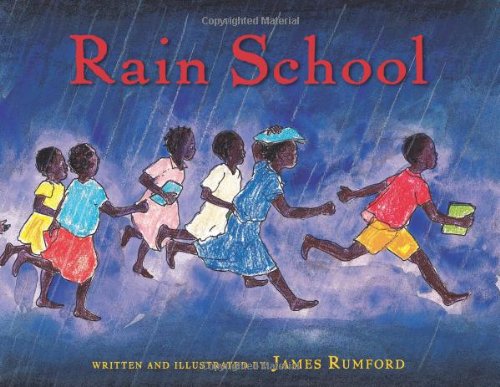
The book takes place in Chad, and the children build their school before starting lessons. It's a simple picture book suitable for all ages. We loved it, especially the part where the kids use a large pointing stick to point out letters on the blackboard. We have video of Z doing the very same thing at his orphanage school. At the end of the book, Z especially enjoyed the map of Africa. He loves maps. He had a lot of questions about why the kids didn't have a school to begin with. Why they were all in the same class. Why they were learning the alphabet. I completely loved the simple, colorful pictures and the story from another culture's perspective. Highly recommended for everyone!
Where have I been? Let me tell you... yesterday was 80 degrees and I was not about to waste all that lovely weather sitting in front of a computer. Plus the usual laundry and bills and errands. However, I have a great wrap up of our vacation and a book review for you, so here we go.
Vacation Day 5: we drove home. Yep. That's it. And we were so glad to get home. Car trips are wonderful, but sometimes the very best part is when you pull up to your house at the very end.
I recently read this book to Zinabu:
The book takes place in Chad, and the children build their school before starting lessons. It's a simple picture book suitable for all ages. We loved it, especially the part where the kids use a large pointing stick to point out letters on the blackboard. We have video of Z doing the very same thing at his orphanage school. At the end of the book, Z especially enjoyed the map of Africa. He loves maps. He had a lot of questions about why the kids didn't have a school to begin with. Why they were all in the same class. Why they were learning the alphabet. I completely loved the simple, colorful pictures and the story from another culture's perspective. Highly recommended for everyone!
2/23/11
Book Review
When the people of Egypt were at the height of their protests, Carver had a discussion with David and me about peaceful protests. Carver is at a great age. Seriously. Do not fear your kids getting older. It just gets more exciting and you get to introduce them to amazing current events and slowly brainwash them to buy into your political views. (Did I just say that out loud?) Ok, not exactly. You teach your kids what you believe andbeg them to hope they feel the same as you do about certain issues as they mature. When the people of Egypt were peacefully protesting, we talked with Carver that this style of opposition has a long history and was especially evident in the sit-ins in the segregated South of our country. To our horror, he had never seen a picture of those sit-ins. Thank goodness for Google images, which I used as fast as I could to find some photos. The look on Carver's face, though, as he saw innocent people with flour and syrup and milk streaming down their heads while sitting peacefully at counters made me inwardly sob. We searched through many images, and as I did, this book popped up.
It's a well-written account of the sit-in movement at food establishments across the South in the early 1960s, starting with 4 friends at Woolworth's in Greensboro, North Carolina. Did you know North Carolina happens to be Lily's home state? Mmmm hmmmm.The illustrations are vivid, the text is simple, and the message is powerful. I highly recommend it. I especially love the last page of the story that includes a "recipe for integration:"
1. Start with love.
2. Add conviction.
3. Season with hope.
4. Extra faith to flavor.
5. Mix black people with white people.
6. Let unity stand.
7. Fold in change.
8. Sprinkle with dignity.
9. Bake until golden.
10. Serve immediately.
*Makes enough for all.
I don't know about you but I think that's a recipe for life. Is this suitable for all ages? I suggest kids 7 and older. Although the text is simple enough to follow, the topic and historical facts included in the pages could be lost on a younger child. You'd have to decide for yourself if you think your kiddo could take it all in. And you can just bet your bottom dollar I'll be writing to the author.
The other book I recently read to Zinabu was this.
A fun and (overly) simplistic story of a boy who changes into a superhero when the city's parks vanish. A cute tale of his imagination and science skills as he restores order to the urban jungle. The information about the books says it's for kids ages 3-5, but that's not the case at our house. Z is 7 and he loved it. I love that it features an African American boy using his brain.
When the people of Egypt were at the height of their protests, Carver had a discussion with David and me about peaceful protests. Carver is at a great age. Seriously. Do not fear your kids getting older. It just gets more exciting and you get to introduce them to amazing current events and slowly brainwash them to buy into your political views. (Did I just say that out loud?) Ok, not exactly. You teach your kids what you believe and
| Sit-In by Andrea David Pinkney |
It's a well-written account of the sit-in movement at food establishments across the South in the early 1960s, starting with 4 friends at Woolworth's in Greensboro, North Carolina. Did you know North Carolina happens to be Lily's home state? Mmmm hmmmm.The illustrations are vivid, the text is simple, and the message is powerful. I highly recommend it. I especially love the last page of the story that includes a "recipe for integration:"
1. Start with love.
2. Add conviction.
3. Season with hope.
4. Extra faith to flavor.
5. Mix black people with white people.
6. Let unity stand.
7. Fold in change.
8. Sprinkle with dignity.
9. Bake until golden.
10. Serve immediately.
*Makes enough for all.
I don't know about you but I think that's a recipe for life. Is this suitable for all ages? I suggest kids 7 and older. Although the text is simple enough to follow, the topic and historical facts included in the pages could be lost on a younger child. You'd have to decide for yourself if you think your kiddo could take it all in. And you can just bet your bottom dollar I'll be writing to the author.
The other book I recently read to Zinabu was this.
| Superhero by Marc Tauss |
A fun and (overly) simplistic story of a boy who changes into a superhero when the city's parks vanish. A cute tale of his imagination and science skills as he restores order to the urban jungle. The information about the books says it's for kids ages 3-5, but that's not the case at our house. Z is 7 and he loved it. I love that it features an African American boy using his brain.
Subscribe to:
Posts (Atom)